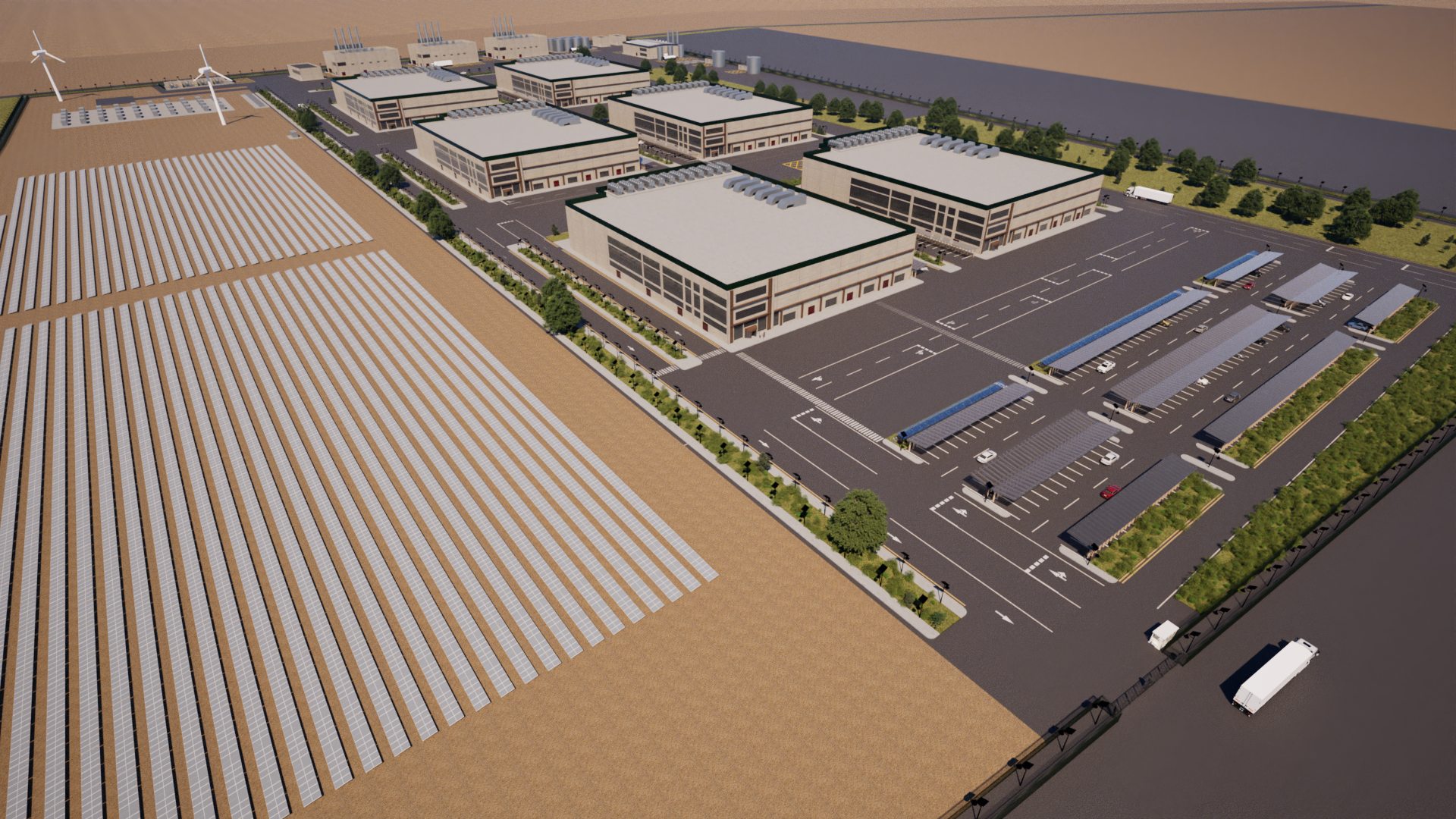

01 · GENERATE
Twelve engines. Ten at work, two on standby.
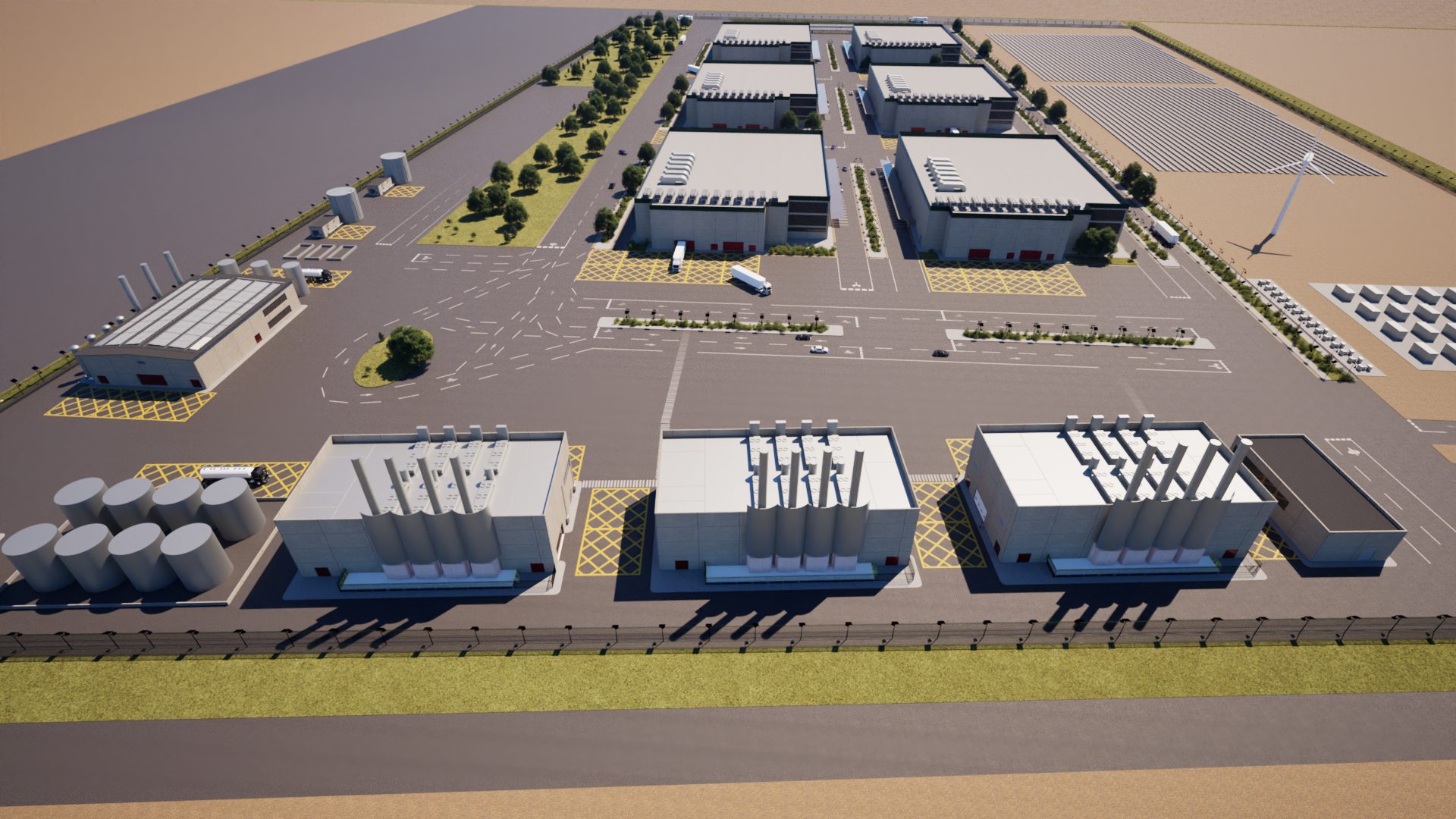
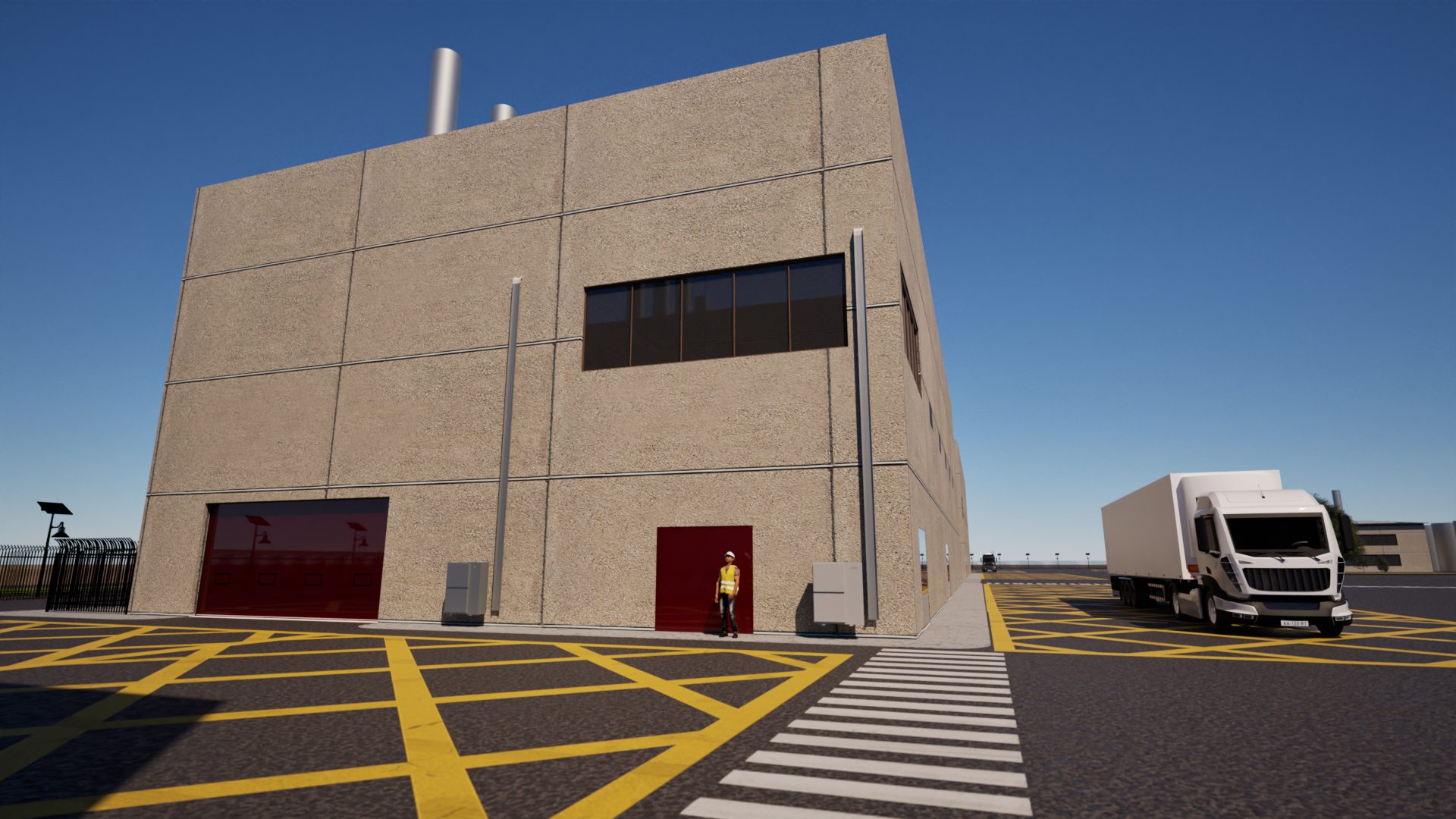
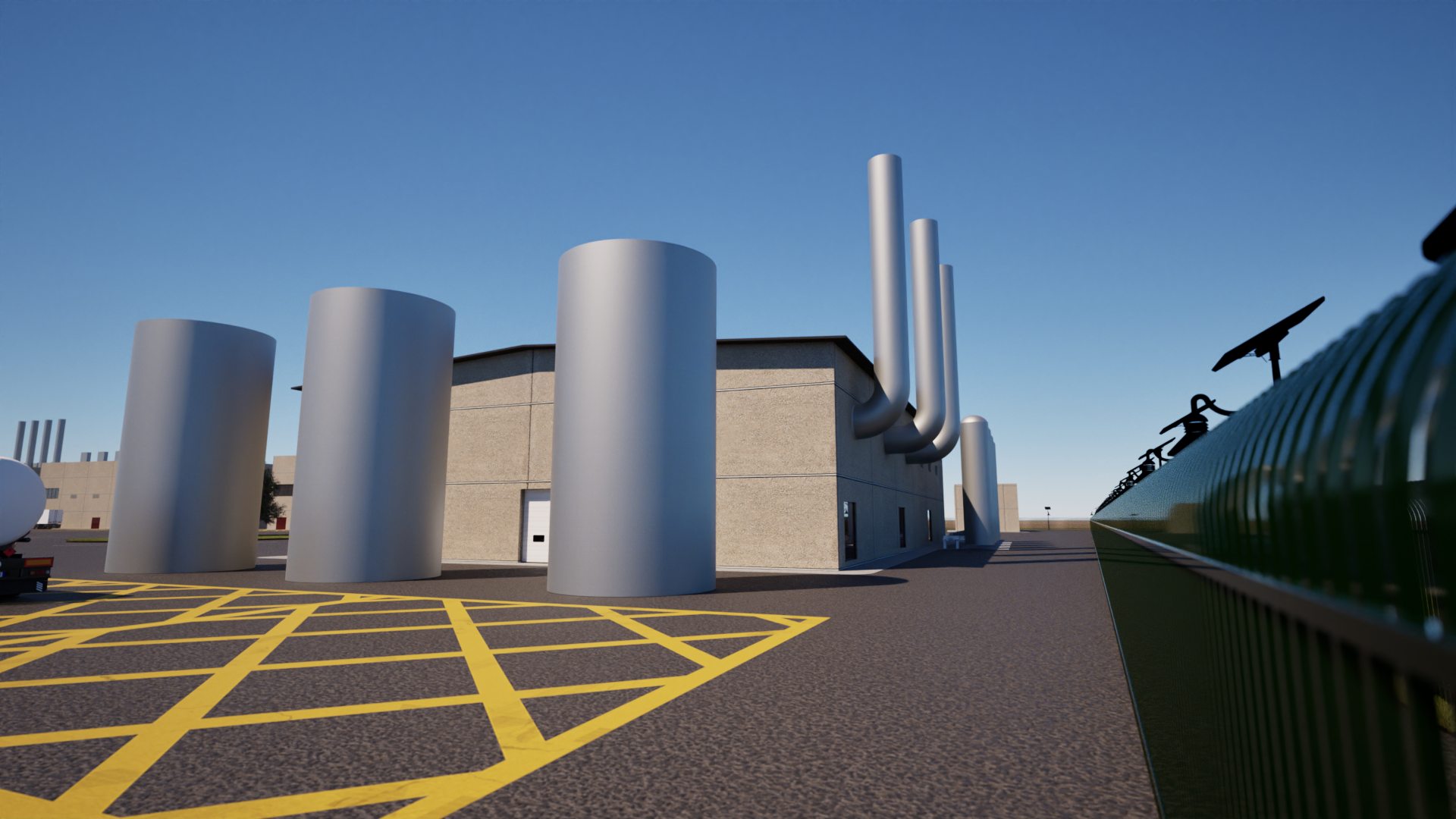
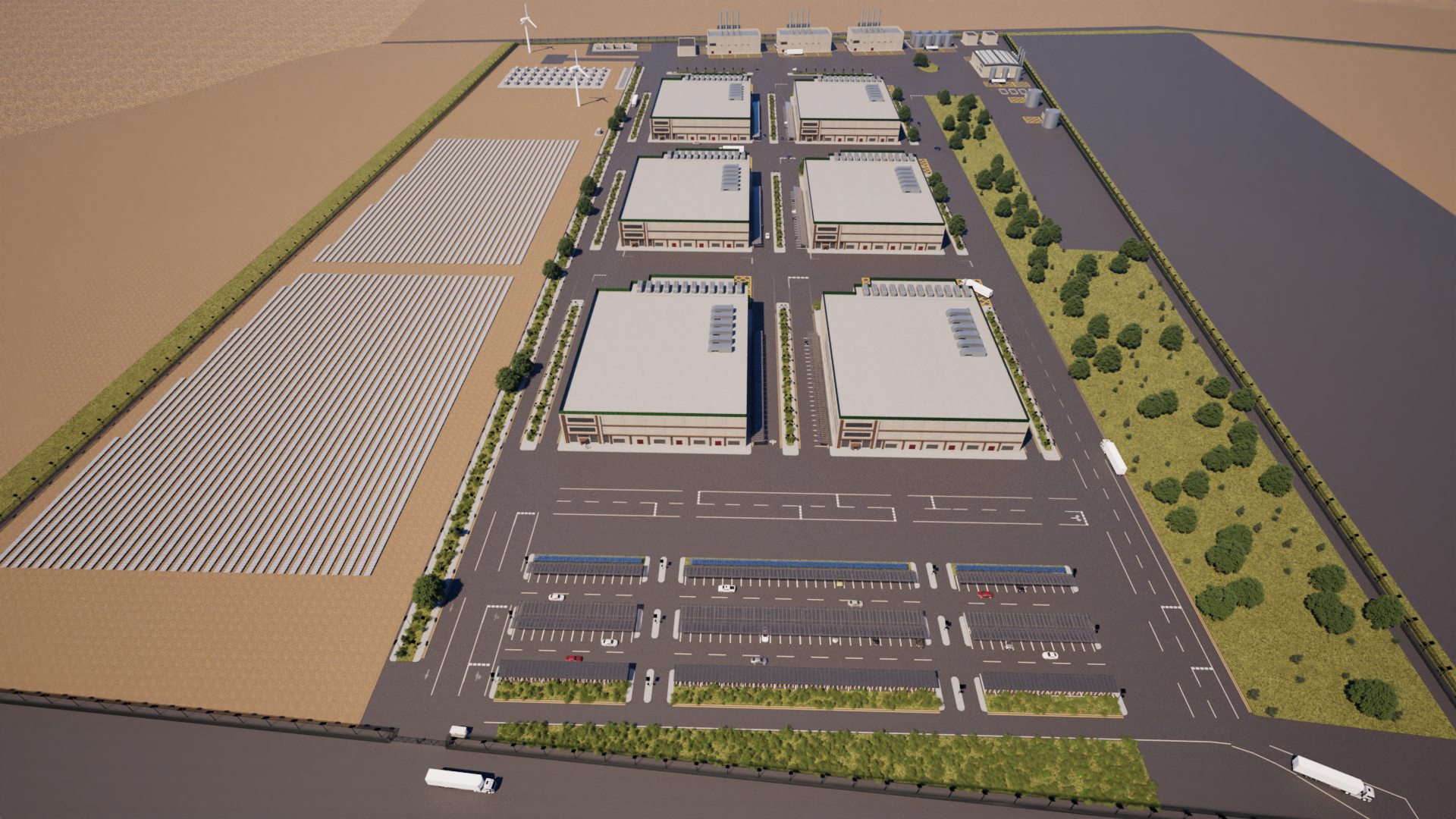
Pipeline gas feeds three enclosed energy centres. Their engines add up to 275 MWe installed. With two always in reserve, 229 MWe is firm, more than the 210 MWe the campus needs at its peak. If the gas stops, they switch to liquid fuel stored for 12 hours.
02 · STABILISE
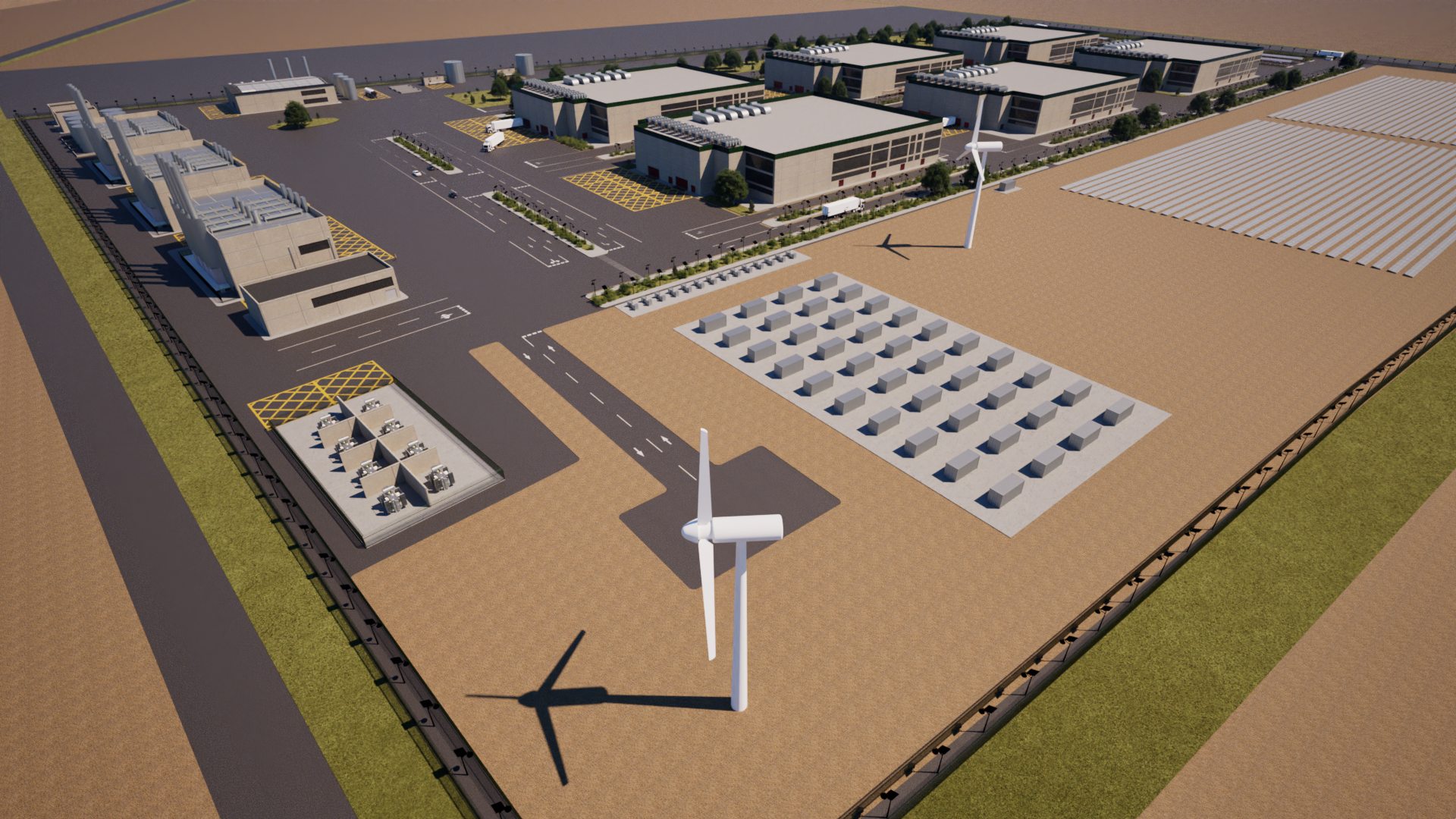
A 200 MWh battery smooths every spike.
Server loads change in milliseconds. The battery steadies the microgrid and bridges the minutes while a reserve engine starts.
03 · COOL
Natural CO₂, rejected dry.
The cooling plant uses CO₂ as its refrigerant and releases heat to the air without evaporating water. Liquid cooling can reach AI-density racks.
04 · CAPTURE AND REUSE
Exhaust heat drives the capture.
Heat recovered from the exhaust drives a capture plant that takes CO₂ from part of the exhaust, liquefies it and ships it for reuse. The preliminary target is about 20,000 tonnes a year in stage one.
05 · MEASURE
One control room sees it all.
Energy, buildings, plant and IT report to one 24/7 operations centre, which tracks efficiency, water and every tonne of CO₂.